

Good Trouble
On John Lewis, the Lifetime Commitment, and Crossing the Bridge Anyway

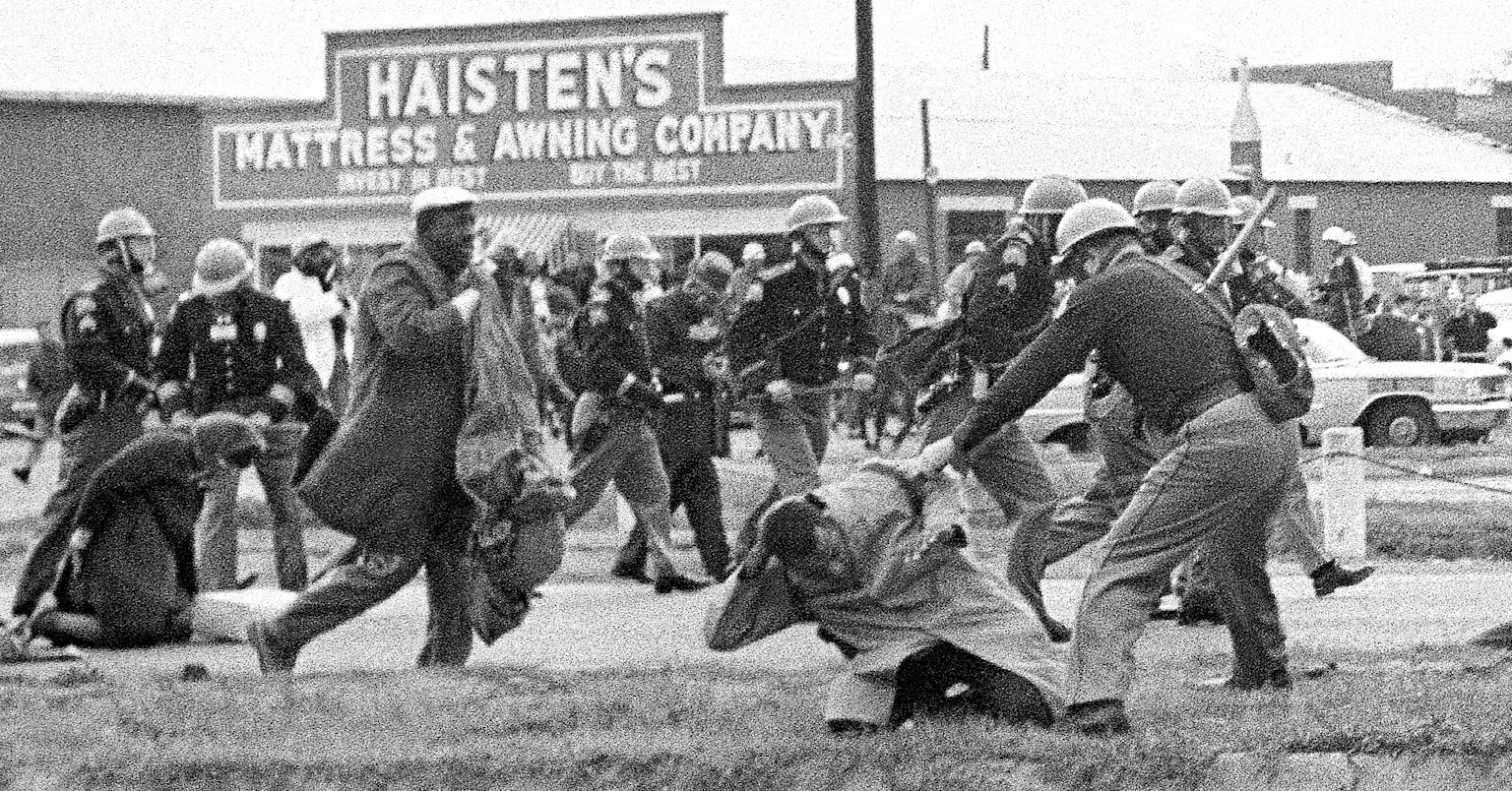
John Lewis wrote,
“Do not get lost in a sea of despair. Be hopeful, be optimistic. Our struggle is not the struggle of a day, a week, a month, or a year, it is the struggle of a lifetime. Never, ever be afraid to make some noise and get in good trouble, necessary trouble.”
I have been in rooms where I should have said something and didn’t.
Not because I didn’t know what needed to be said. Not because I wasn’t doing the work, building toward the kind of person who speaks clearly and acts with conviction. But because in the moment, with the actual cost sitting right in front of me, I chose to do the easier thing.
I’ve written about the silence that doesn’t protect you. I’ve written about turning the light on to the truth, especially in our writing. But there is a difference between what we are willing to write and what we are willing to do when the moment is live and the cost is immediate and real.
John Lewis crossed a bridge on a Sunday afternoon in March 1965, walking toward a line of state troopers on horseback. He knew exactly what was waiting on the other side.
He had been beaten before. He had been jailed more than forty times. He had every piece of evidence a reasonable person would need to turn around and go home.
But he kept walking.
Anyone who is trying to do the inner work and find their voice and start the thing and turn on the light will inevitably find themselves standing at the edge of whatever bridge has been waiting for them all along. And they must ask themselves the same question.
Perhaps John Lewis asked himself a version of the same question many of us eventually face.
Are you going to cross it?
The Bridge
Bloody Sunday is one of the most documented moments in American history.
On March 7, 1965, six hundred marchers stood on the Edmund Pettus Bridge in Selma, Alabama. State troopers waited on the other side with clubs, tear gas, and horses. John Lewis was twenty-five years old and was leading the march.
The troopers gave them two minutes to turn around. Lewis and the march co-leader, Hosea Williams, kept walking. The troopers charged. Lewis was beaten to the ground, and his skull was fractured. He was left lying on the bridge.
Just days later, he returned to the bridge. And within weeks, he joined the successful march from Selma to Montgomery.
That is the part many people overlook. Not the first crossing, which required enormous courage. But the second one, which required something greater.
Conviction.
The willingness to return to the exact place where you were broken, to walk back across a bridge that nearly killed you requires conviction.
Lewis spent sixty years doing different versions of this. The lunch counter sit-ins in Nashville, where he was beaten repeatedly. The Freedom Rides, where he was attacked in Montgomery. The ongoing struggle for voting rights long after Selma had faded from the headlines.
Decades in Congress, fighting legislation that had already failed before, introducing bills that wouldn’t pass, making noise in rooms that had grown comfortable with his presence and uncomfortable with his persistence. He never stopped making the noise. He never decided the bridge would cost him too much to cross again.
He called it good trouble. Necessary trouble.
He meant that some things are worth disturbing the peace for. That the comfort of keeping things calm is not the same as the comfort of doing what is right.
There will be bridges in every phase of life — not always made of steel, not always guarded by troopers on horseback, but real nonetheless — and the task at hand is to keep crossing them, even when you’ve been hurt on them before.
The Lifetime Commitment
Here is what I think we misunderstand about John Lewis.
We tend to receive him as an icon of a particular historical moment—Selma, the March on Washington, the civil rights era—and in so doing, we insulate ourselves from his actual challenge.
We make his courage historical. We put it at a safe distance.
We conclude that what he did was extraordinary, that what he faced was extreme. But we also note that we are not facing those exact conditions today. We relegate his advocacy and courageous protest as a historical artifact.
But even Lewis himself refused that framing. His farewell letter, written as he was dying of pancreatic cancer in 2020, was not a retrospective.
He wrote it to the next generation, to people who had never been to Selma, who had never been jailed for sitting at a lunch counter, who were living ordinary lives in ordinary times. And he told them:
“Get in good trouble.”
He was not describing a historical obligation. He was describing the shape of a committed life.
The lifetime commitment is what we have been building toward in this series. Wells didn’t document one lynching and stop. She spent four decades as a journalist and activist, returning to the work long after it had already cost her everything she had in Memphis.
King didn’t march once and consider his obligation fulfilled. He marched, and was beaten, and marched again, until the day he was killed.
Cooper didn’t write one book and retire into obscurity. She kept teaching, kept advocating, kept knocking on doors until she was sixty-six years old and earned her doctorate from the University of Paris, achieving a goal she had pursued for decades despite barriers of race, gender, and circumstance.
The common thread is not heroism. It is return.
Every one of these freedom fighters crossed a bridge and came back and crossed it again. Every one of them understood that the work was not assigned to a season but molded into a posture—a way of being in the world that didn’t end when the conditions got hard or the results got slow or the bridge got guarded more heavily than it used to be.
Lewis wrote:
“Though I am gone, I urge you to answer the highest calling of your heart and stand up for what you truly believe.”
He was not asking for a single act of courage.
He was asking for a lifetime of good trouble.
Your Good Trouble
Do not compare your own journey to John Lewis or anyone else.
Lewis crossed a bridge with six hundred people toward armed state troopers on horseback. Perhaps you are simply trying to publish a newsletter, have a hard conversation, or build a body of work in the margins of an ordinary life with three boys at home and a calling that keeps asking more of you than the calendar easily allows.
The comparison could make your bridge feel small.
But even Lewis crossed a variety of bridges. He spent his career in Congress introducing legislation and making speeches and voting his conscience in ways that got him called difficult, disruptive, insufficiently pragmatic.
Not every act of good trouble is a march across a historic bridge.
Some of it is the conversation you keep initiating even though it keeps ending awkwardly. Some of it is the work you keep showing up to even when the results are slow.
Some of it is the stand you take in a room that would prefer you sit down, or the piece you publish that was easier to leave in the drafts folder, or the version of yourself you keep bringing to the table even when a smaller version would be more convenient for everyone else.
Good trouble is not always loud. Sometimes it’s simply persistent.
The arc of this series has been leading to this point. You looked in the mirror and decided to become what you sought. You survived the shaking and let dead things fall. You dropped the veil and decided to show up whole.
You waited with faith and didn’t let the waiting become paralysis. You tended the garden every day and found the courage to be seen. You spoke when silence would have been safer. You began when later would have been easier.
You turned the light on even when the room preferred the dark. You planted the tree without knowing if you’d see the shade.
And now, you must develop the willingness to keep going.
Not just once. Not just in the extraordinary moment.
As an ongoing practice, a steady posture, a lifetime commitment to the thing you were built to do and the people you were built to serve.
Lewis crossed the bridge the second time with a fractured skull that wasn’t fully healed. He wasn’t fully recovered. He wasn’t certain of the outcome.
But he went back because the bridge still needed crossing.
Find Your bridge
Find your bridge. You likely already know what it is.
Maybe you’ve already been across it once and it cost you something and you’ve been waiting to feel more ready than you did the first time.
Maybe you haven’t crossed it yet because you’ve been doing the inner work, and now the inner work is asking you to manifest your truth to the world.
Either way, the bridge is still there.
And that thing on the other side—the version of your work that is fully expressed, the community that needs what you carry, the freedom that belongs to not only you, but everyone you bring with you—it is still waiting.
Lewis made it to the other side of that bridge in 1965. He lived to see the Voting Rights Act signed into law. He lived to see a Black president elected. He lived to see his own life become a witness that changed the lives of people he never met.
He didn’t get everything he marched for. Yes, the work is not finished.
But he crossed the bridge anyway.
And then he crossed it again.
That is the invitation. That is the commitment.
That is the good trouble.
In solidarity,

P.S. As always, thank you for reading this edition of Freedom Papers. If you found this piece meaningful, share it with a friend. Let our stories of resilience, justice, and love continue to inspire others, as we all work toward a better, more inclusive future. And write. Write, day and night, my friend. We are running out of time.
Thank you. I needed this.
I cried while reading this. It was good encouragement.