

Let the Miracle Unfold
On Howard Thurman, Surrender, and the Discipline of Trust

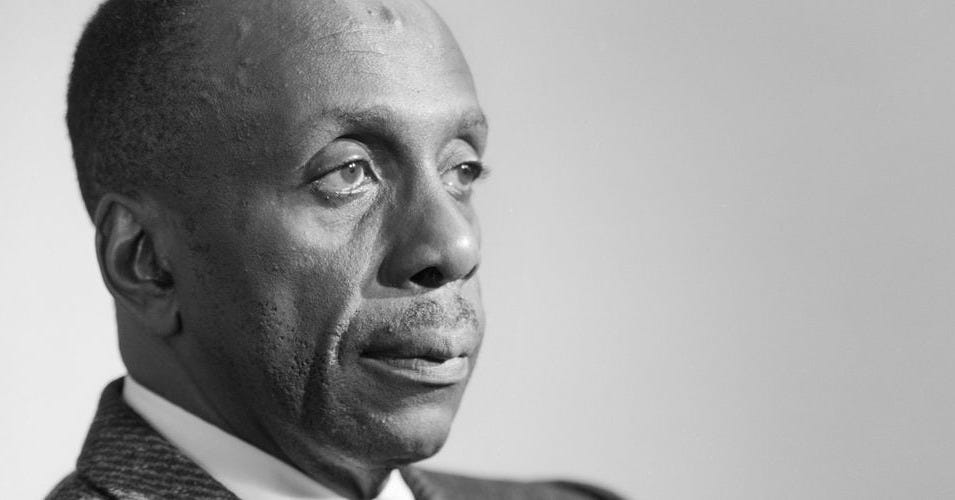
Howard Thurman once wrote,
“Don’t ask what the world needs. Ask what makes you come alive, and go do it. Because what the world needs is people who have come alive.”
Coming alive, as Thurman understood it, is not simply about self-expression or fulfillment. It is an act of surrender. It requires trust. It asks us to stop managing the miracle and to begin living inside it.
At some point, we have to stop checking in on our miracle.
We have to stop monitoring the process, questioning the timeline, and peeking over our shoulder to see whether God remembered what we asked for. Faith does not grow through constant inspection. It grows through release.
The story of the Red Sea makes this clear.
Once Moses stretched out his hand and the waters parted, the people did not stop halfway through to see whether the walls of water were still holding. They did not pause to measure the distance or debate whether the ground beneath their feet was secure enough.
They walked—step by step—trusting that what God had begun, God would sustain.
And yet this is precisely where we struggle.
We ask God to move, and then we spend every day monitoring His progress, as if promise requires supervision.
Faith Doesn’t Need Your Supervision
There is a particular kind of anxiety that accompanies waiting on God.
We pray. We believe. We ask for what we need—the breakthrough, the healing, the provision, the clarity—and then we spend our days wondering whether it is happening yet. We question whether we prayed hard enough, whether we did our part, whether God is still listening.
We treat our prayers like packages we are tracking, constantly refreshing the page to see where they are in the delivery process. But that is not faith.
It is control disguised as diligence.
Thurman devoted his life to teaching people how to find God in stillness, in silence, in the space between asking and receiving. He called this practice “centering down,” a discipline of quieting the restless mind and trusting that God is already at work, even when there is no visible evidence to confirm it.
In Meditations of the Heart, Thurman describes an “inward sea” within every person, with an altar guarded by what he called the “angel with the flaming sword.”
Nothing, he writes, can be placed on that altar unless it bears the mark of one’s inner authority—unless it has passed through the “fluid area of your consent.” In other words, what we allow past the guard matters.
When anxiety, fear, and the need to control slip through unchecked, they disrupt the interior space where trust is meant to dwell.
The miracle does not require our oversight.
It requires our surrender.
Stop Checking, Start Walking
We repeat this pattern across nearly every area of our lives.
We pray for peace and then catalogue our anxieties to see whether peace has arrived. We pray for provision and then obsessively check our bank accounts, as if God works on our timeline. We pray for healing and then monitor every symptom, every setback, every moment that suggests it might not be working.
But miracles unfold in God’s time, not ours.
The more we attempt to manage them, the more we disturb the peace meant to sustain us while we wait. “The Lord will fight for you,” Exodus tells us; “you need only to be still.”
Stillness does not mean passivity. It means being settled in spirit, rooted in trust, unhooked from the need to control outcomes.
Thurman understood this kind of stillness intimately.
He lived through Jim Crow America, through racial terror, through social and political upheaval. He had every reason to live in a state of constant vigilance, anxiously watching for signs of deliverance.
Instead, he taught generations to anchor themselves in the deep stillness of God’s presence, even when the external world offered nothing but chaos.
“There is a spirit in man and in the world,” Thurman wrote, “working always against the thing that destroys and lays waste.”
That spirit is at work whether we are watching for it or not. Our task is not to supervise it.
Our task is to keep walking.
Live in the Meantime
What we often miss is that the waiting itself is part of the miracle.
The space between asking and receiving is not empty, wasted, or accidental. It is not evidence that God has forgotten or delayed. It is the space where faith is formed, where trust is strengthened, where we learn to live without constant reassurance.
Thurman called this space “the growing edge”—the place where we are stretched beyond what we know into what God is preparing us for.
“Wherever you are,” he wrote, “there is a growing edge for you.”
Living in the meantime means resisting the impulse to treat waiting as a problem to be solved. It means refusing to check the waves every few minutes to see whether they are still parted.
It means walking forward without demanding daily proof.
This is the hardest work for those who pray and believe and wait on what they cannot yet see. Harder than asking. Harder than hoping. Harder even than believing.
The hardest work is letting go and trusting enough to live forward while the miracle unfolds beyond our line of sight.
The Sea Is Already Parting
So let the miracle breathe.
Stop monitoring the process as if God needs your input. Stop peeking over your shoulder to see whether it is happening yet. Stop treating faith like a performance review where you must constantly demonstrate effort.
God does not require your confirmation. He asks for your confidence.
The sea is already parting. The waters are already being held. The path is already being made.
Your work is to walk.
As Thurman reminds us, there is something within each of us that listens for “the sound of the genuine.” When we cannot hear it, we spend our lives pulled by strings we did not choose. Faith is the decision to stop pulling—to stop checking—and to trust that what was promised will be fulfilled.
Not because we managed it into existence.
Not because we controlled every variable.
But because God spoke, and that is enough.
“The Lord will fight for you; you need only to be still.”
The sea is already parting.
Stop checking the waves.
Keep walking.
In solidarity,

P.S. As always, thank you for reading this edition of Freedom Papers. If you found this piece meaningful, share it with a friend. Let our stories of resilience, justice, and love continue to inspire others, as we all work toward a better, more inclusive future. And write. Write, day and night, my friend. We are running out of time.
"Thurman called this space “the growing edge”—the place where we are stretched beyond what we know into what God is preparing us for.
“Wherever you are,” he wrote, “there is a growing edge for you.”
Living in the meantime means resisting the impulse to treat waiting as a problem to be solved. It means refusing to check the waves every few minutes to see whether they are still parted.
It means walking forward without demanding daily proof."
Love this. Thank you.