

The Sound of the Beast
The Law of the Body (Part 3 of 3)

This is the third and final installment in a three-part series adapted from my longform essay The Sound of the Beast, originally published by UCLA Law Review Discourse in Fall 2024. The series explores how Black life is policed in America—not only through traditional law enforcement, but through legal doctrine, cultural mythologies, and lived experience.
In Part 1, The Law of the Nation, I examined how Fourth Amendment jurisprudence casts Blackness as a threat to national security.
In Part 2, The Law at Home, I traced how surveillance infiltrates the intimate spaces of Black domestic life, revealing how even the idea of “home” becomes unsettled under the weight of racialized policing.
Now, in Part 3, The Law of the Body, I turn to the most intimate terrain of all: the Black body. This final installment explores how legal structures and cultural scripts converge on flesh—how the body becomes both evidence and battleground in the struggle for recognition, safety, and freedom. From stop-and-frisk to use-of-force jurisprudence, from the afterlives of chattel slavery to the contemporary spectacle of Black death, the body is rendered both hyper-visible and disposable.
Drawing on critical scholarship, media portrayals, and the embodied memories that shape my own understanding of vulnerability, I ask what it means to inhabit a body the law so often targets—and what it means to reclaim that same body as a site of dignity, defiance, and political power.
Each part of this series moves from nation to home to flesh, tracing a geography of racialized policing that is at once structural and deeply personal. And yet across each terrain, a single question echoes:
What does justice require when the law itself is part of the harm?
The Law of the Body
It was a “gaze that condemned.”
Even before the police officer attempted to explain why I had been pulled over, his penetrating glare through the driver’s side window communicated my mistake. It resonated deep within me, gripping my spirit like an anchor dredging the ocean floor.
My lucky Honda Civic had faithfully carried me up and down the East Coast-from Cambridge to Baltimore and back, with stops in the South Bronx along the way. Now, my vehicle had transformed into a cage, a holding cell where my freedom would be restricted, the place where my voice would be seized. Although I was a law student at the time, my IL criminal law class had focused more on theories of punishment and the elements of crime than on the intricacies of police-citizen encounters.
Nevertheless, I had been exposed to enough policing throughout my life to know that I had the right to remain silent, the right for the police not to “illegally search my shit,” and the right to an attorney if arrested.
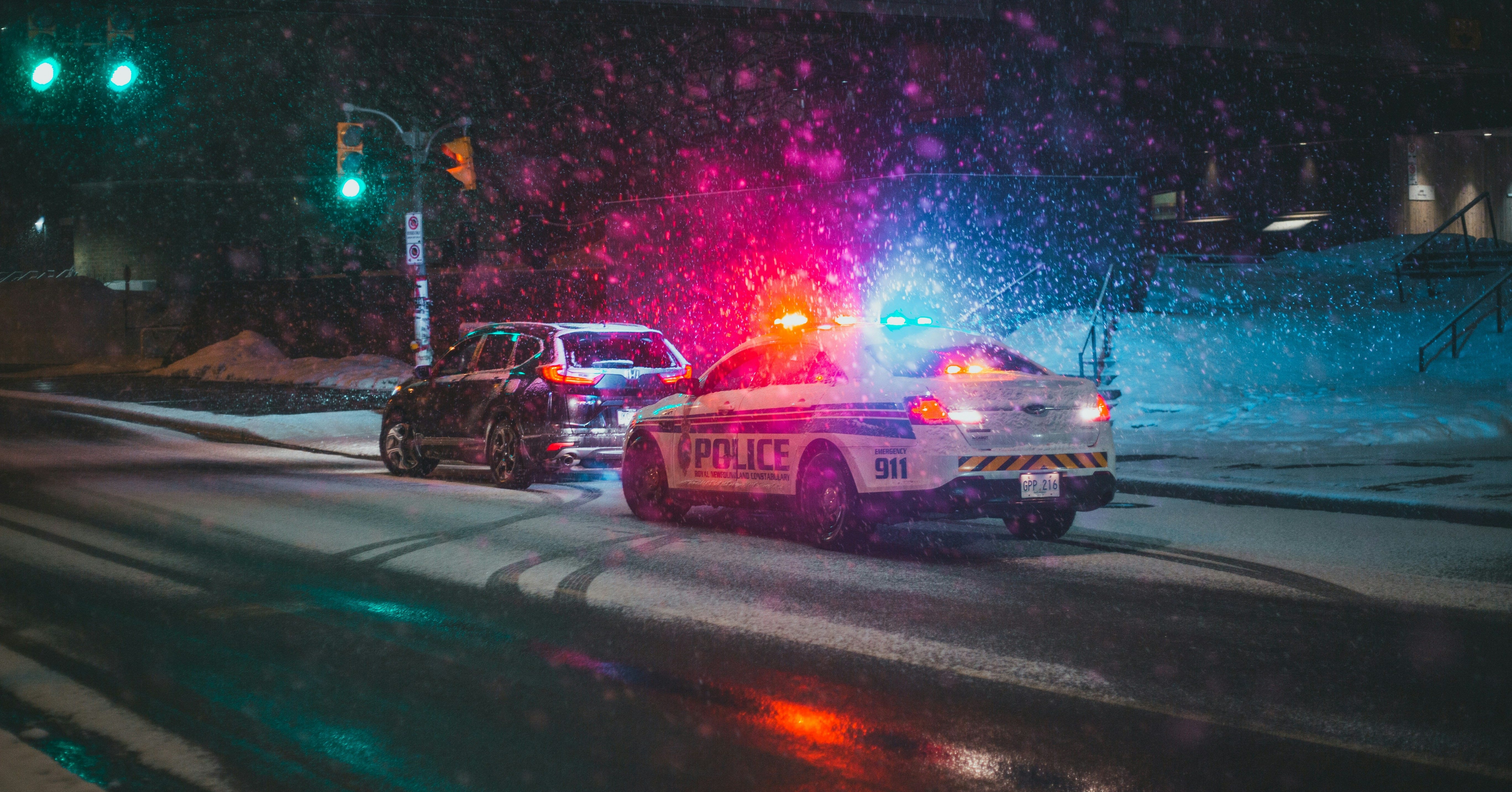
I had just left my childhood home in the Bronx after a weekend visit with my parents and younger brother. Halfway between home and the highway, the shrill wail of police sirens pierced the air behind my car. Glancing in the rearview mirror, I spotted the sleek black-and-white van closing in, its rotating lights flashing behind my Honda. My body sank deeper into the worn cloth seat as my stomach churned like seaweed beneath the morning tide.
It was the middle of the afternoon, the distant sounds of children’s laughter lingering upon the breeze. I eased my foot onto the brake and guided the vehicle toward the curb near a towering apartment building. Although I knew I hadn’t exceeded the speed limit in this residential area dotted with stop signs, and although I was certain my Massachusetts license and registration was up-to-date, a knot of apprehension tightened in my chest.
Two officers approached with measured strides, one from either side of my car. I watched their deliberate movements through my rearview mirror, careful not to make any sudden gestures. They peered through the tinted windows before coming to a halt at the driver-side and passenger-side doors. I turned my head toward the officer standing on the left, acutely aware of the other officer’s intense glare burning into the back of my neck like a desert sun kissing dry sand. The initial questions felt innocent yet confusing.
Where are you coming from?
Where are you headed?
Do you know why we stopped you?
Without offering an explanation, the officer requested my license and registration. I obediently handed over my Massachusetts ID, watching the men retreat to their vehicle as I remained seated in mine, wondering what law I had broken. A whirlwind of thoughts swirled through my mind.
Should I have mentioned that I am a student at Harvard Law School, quickly flashing my student ID as proof?
Should I have inquired about the reason for the stop?
Should I have mentioned that I grew up merely blocks away in this very neighborhood?
Was I being lawfully detained, or did this investigation cross legal boundaries? Was this even legal?
What did I do wrong?
I craved answers, but I was afraid to ask any questions. Surely, I thought about what I could or should say when the officers returned, but such details now escape me, dissolved memories like old footprints in shifting sand. All I can recall is my mouth growing dry, and soon enough, my tongue was a lead weight, rendering me speechless-a forgotten cinder block cast aside in a desolate rear alley, with no ramp in sight to offer an escape.
When the officers return, words will not exit my lips. The officer hands me my license and registration, along with a citation. You’re too loud, he declares, the words a rebuke. Change your muffler.
I say nothing as the officer’s words fall upon my Black skin like dry dirt raining down upon carved willow, six feet below the tombstone. Buried in fear by the sound of the police—the sound of the beast—I can only nod, grateful that at least I remain unharmed. I had modified my car to unleash its power, a celebration of speed and adrenaline, a tribute to icons like Paul Walker and David Hasselhoff. I had adorned my vehicle—my home away from home—with embellishments that proclaimed my worthiness, my rightful place on the road.
Yet, even within the sanctuary of my car, I realized that I am still exposed, still vulnerable. I am still in the place where I can never truly belong.
I am still outdoors.
For a fleeting moment, I am consumed with anger at the silliness of it all.
My childish obsession with modifying my cheap Honda Civic, adorning it with an obnoxious sport muffler that now drew the ire of authority. The equally ludicrous notion that my little green car could possibly disturb the perpetual cacophony of the South Bronx streets. Like Pecola, who tripped on a sidewalk crack after exiting a candy store after being humiliated by the shopkeeper, I am filled with indignation. The anger that “stirs and wakes in her”—and I suppose the rage that now boils within my own veins—opens its mouth, and like a hot-mouthed puppy, laps up the dredges of ... shame.”
After all, this is my fault.
What was I thinking? Didn’t I know better? The beast has always been me—America’s brute, the Black man “lurking in the dark, a monstrous beast, crazed with lust. His ferocity ... demoniacal.” In a flash, Pecola’s fleeting burst of anger at something as trivial as tripping on a crack—the climax of the mundane frustrations that permeate her Black life—is “quickly quenched, it sleeps. The shame wells up again, its muddy rivulets seeping into her eyes.”
And suddenly, I become the girl in the pages of Morrison’s novel, silently pleading to a seemingly indifferent God, “Please make me disappear.” And I do disappear—my body “fold[ing] into [itself], like a pleated wing.”
Even now, I can hear Claudia from The Bluest Eye whispering the same lament about me that she uttered about Pecola, who cowered under the relentless weight of bullying, teasing, and rejection from the other children in her town. Reflecting on Pecola’s palpable sense of helplessness, Claudia confesses,
“I wanted to open her up, crisp her edges, ram a stick down that hunched and curving spine, force her to stand erect and spit the misery out on the streets.”
But she does not, and neither do I. Unable to muster a defense with my rudimentary understanding of law and policing, I accept my “cloak of ugliness,” concluding the exchange with a feeble smile.
Thank you I whisper.
I hang my head in shame, drive away toward Massachusetts, and eventually hire an attorney to attend the court hearing on my behalf. After the lawyer indicates that I have complied by changing my muffler and paying the accompanying fine, the case is summarily dismissed.
I realize now that the outdoors is not merely a physical space, but a condition—a state of being that carries an inescapable burden for those like me. According to Carbado, “Black men between the ages of twenty-five and twenty nine are twice as likely to be stopped multiple times in one year by the police than white men within the same age group.”
The trauma of “driving while Black”—the kind of simmering fear that sent Walter Scott running in April 2015 after being pulled over for a broken taillight, only to be gunned down in the back mere moments later—courses through the veins of too many Black Americans as they grip the steering wheel. While Fourth Amendment law recognizes traffic stops as seizures, the harsh reality is that
“so long as police officers have probable cause to believe that a suspect has committed a traffic infraction-any traffic infraction the fact that the decision to stop the car was racially motivated does not make that seizure unreasonable.”
The law, so often lauded as a great equalizer, instead becomes an instrument of oppression in the hands of police, a cudgel wielded with impunity against an entire demographic.
The law does not preclude police officers from exploiting traffic code violations as pretexts to investigate other suspicions, even when those ulterior motives are rooted in racial biases. The low bar of probable cause for traffic infractions, as established in Whren v. United States, allows police departments to wield traffic stops as instruments of systemic oppression—tools to “sniff out” perceived criminals in communities suspected of illicit activity, confirming or reinforcing their racialized biases one calculated policing step at a time. These steps compound, each tightening the noose around the neck of due process.
It begins with the initial traffic stop, swiftly escalating to interrogations about drugs, invasive record checks, demands for drivers and passengers to exit the vehicle, requests to search the car and frisk its occupants, the deployment of drug-sniffing canines, the seizure of any cash found within, and, ultimately, the decision to arrest-all predicated on the flimsiest of pretenses. The process resembles a well choreographed dance, a perverse ritual in which the lives and liberties of entire communities are sacrificed at the altar of racial animus, their constitutional rights trampled underfoot in the name of law and order.
The sheer invasiveness of these compounding steps underscores the vast breadth of police power, while simultaneously revealing the suffocating shadow that racial profiling casts over Black freedom, privacy, and agency. Cases like Florida v. Bostick, where the police uncovered drugs on a Black person during a bus sweep, are cited as justification for granting law enforcement broad discretion to investigate perceived wrongdoing in Black communities.
However, for every traffic stop that fortuitously uncovers illicit substances, there exists many others—seemingly mundane encounters, like mine—that serve only to further erode the tenuous trust between law enforcement and the Black Americans they have sworn to protect and serve. These routine indignities visited upon those who call low income or so-called high-drug areas home, foster an insidious climate of fear and distrust, leaving entire communities “less trusting of, and more terrified around, law enforcement.”
To make matters worse, I was a student.
U.S. history has demonstrated the grave dangers faced by student protesters who use their voices to challenge social injustice under the watchful eyes of police officers. Countless classrooms have recounted the demoralizing stories of peaceful student protesters during the 1950s and 1960s who were threatened by vicious attack dogs, beaten with police clubs, and blasted by powerful fire hoses for merely exercising their right to decry the racial injustices of Jim Crow laws.
I had already learned about the violent police crackdown on peaceful anti-war student protesters at Kent State University in Ohio in 1970 during the Vietnam War and the U.S. invasion of Cambodia, where the Ohio National Guard killed four students and injured nine others. I had already learned about the students arrested at Columbia University in the 1980s for demanding the university divest from corporations associated with the apartheid regime in South Africa.
When Toni Morrison won the Nobel Prize in Literature in 1993, two years after the Gulf War, she proclaimed the power of language to usher in a “certain kind of peace . . . the dance of an open mind when it engages another equally open one-an activity that occurs most naturally, most often in the reading/writing world we live in.” However, Morrison warned that the peace of open dialogue in the reading and writing world “warrants vigilance.”
In our modem era, the peace offered by the dance of open minds remains haunted by the specter of coordinated police violence. For students brave enough to protest injustice, the ever-present threat of police retaliation can make activism an unacceptable risk, chilling their voices and perpetuating the very oppression they fight against. Campuses, meant to be revolutionary spaces for open discourse, teeter on a knife’s edge, with liberated dialogues hanging in the balance against a looming, militant police force.
When student protestors took to the streets in 2020 to decry police brutality following George Floyd’s murder by a Minneapolis police officer, they were met with tear gas, pepper spray, and batons. More recently, NYPD officers stormed Columbia University in April 2024, confronting hundreds of students protesting the ongoing genocide in Palestine with riot shields, batons, tasers, zip ties, and guns.
In each instance, it remains unclear when excessive police force becomes an “unreasonable seizure” under the Fourth Amendment, as what is being seized is one’s right to peacefully assemble and speak. As Carbado and countless other scholars have argued, for Black Americans, it often feels like the police exist to “discipline and social[ly] control [Black people] in ways that ‘protect and serve’ the interests of white supremacy.”
In hindsight, I should have known on that fateful day, as I departed my mother’s home to return to law school, that the police might pull me over. I was a twenty-five-year-old educated Black man, driving a Honda Civic through the South Bronx, my out-of-state plates and aftermarket sport muffler attracting more attention than a construction worker’s neon vest, inviting unwanted scrutiny.
Yes, I am a U.S. citizen whose right “to be secure ... against unreasonable searches and seizures” is ostensibly safeguarded by the Fourth Amendment. But in that moment, I was reduced to a series of cultural signifiers in the eyes of those sworn to uphold the law-too loud, too furtive, too Black.
I was outdoors.
Some days, I think about David Floyd, who spearheaded the class action lawsuit challenging the NYPD’s disastrous stop-and-frisk policy.
He was stopped and frisked by two police officers while merely walking down his block in the South Bronx, the very neighborhood where I grew up. The officers, perched like predatory birds in their police van less than two miles from my childhood home, had somehow detected his “suspiciousness” from afar. While I’ve been stopped many times by the police, I’ve never been frisked.
Was it my proximity to Whiteness that saved me-attending the “right” schools, earning the “right” degrees, knowing the “right” words to utter and, perhaps more, when to say nothing at all? Did I simply get lucky, evade a harsher fate by fleeing New York City in my green Honda, trading the harsh realities of the Bronx for the promises of Cambridge before the police could discover another pretext to detain me? Or is it merely a matter of time until I, too, am next?
On other days, I think about Pecola Breedlove, the tragic heroine from Morrison’s novel. To her fictional community, she stands as a haunting reminder of Black vulnerability in the face of White supremacy’s merciless onslaught. By the story’s end, Pecola unravels, descending into a madness that renders her a mere specter of her former self, “[l]ittle parts of her body fad[ing] away” until only her eyes remain. In her fragile psyche’s ideal world, she possesses blue eyes beautiful like Shirley Temple. But when the harsh light of reality hits, shame becomes “a crippling emotion that leaves her merely humiliated, disempowered.”
In a way, Pecola places herself outdoors of the Black community, unable to fight back against the relentless forces arrayed against her, yet unwilling to give in, bereft of any true sanctuary. She “simply substitutes her inchoate reality with a better one: she has blue eyes which everyone admires and envies.”
As I revved up my engine and embarked upon the familiar journey northward toward Massachusetts once more, my northern star, I must have thought to myself:
At least I have Harvard.
Everyone admires and envies Harvard, right?
In solidarity,

Note: This is the third in a three-part series. If you haven’t already, check out Part 1 (The Law of the Nation) here, and Part 2 (The Law at Home) here.
P.S. As always, thank you for reading this edition of Freedom Papers. If you found this reflection meaningful, share it with a friend. Let the story of resilience, justice, and love continue to inspire others, as we all work toward a better, more inclusive future.
Absolutely stunning work. Your use of Morrison's "outdoors" concept to describe both the traffic stop and the larger condition of Black embodiment under surveillance is breathtaking, because it collapses the distance between literary metaphor and lived constitutional reality. What strikes me most is how you show that Whren doesn't just permit pretextual stops, it actually incentivizes police to manufacture technical violations as gateways into bodies and communities, turning the entire traffic code into a searchable database of excuses. The question you pose about what justice requires when law itself is the harm feels especially urgent given how Fourth Amendmnet doctrine continues treating Blackness as probable cause dressed in legal launguage.
Your three-part series is profound. This third one, The Law of the Body, illustrates the experience of driving while black in a way that hits home for those of us who have not experienced it. Would you be interested in having that experience developed into a live performance? Many thanks for sharing your insights. I believe we are moving closer to peace. Such efforts as yours and countless brave others make it so.