

You Are Not Falling Apart
On Octavia Butler, Change, and the Work of Becoming

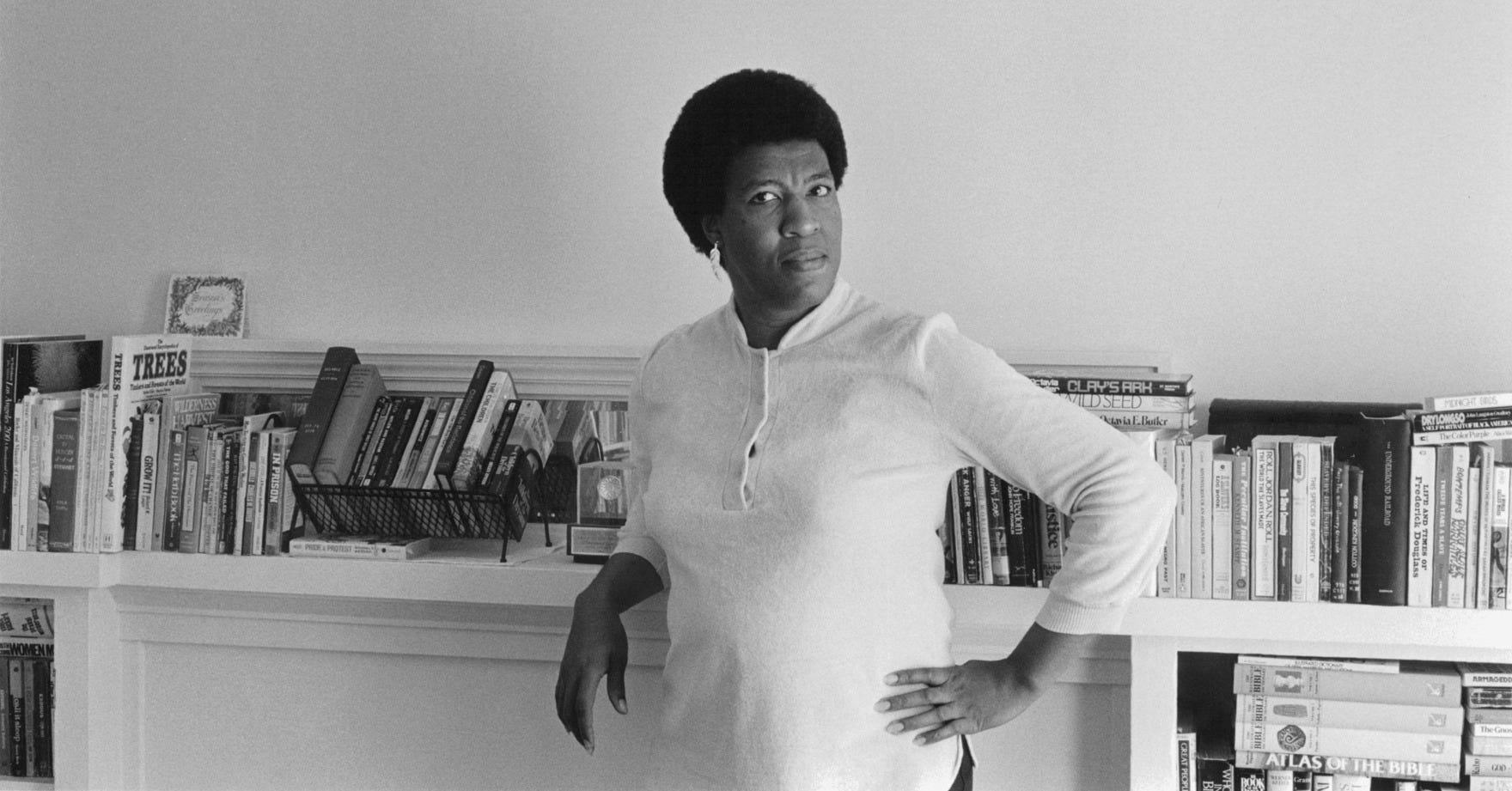
Octavia Butler wrote,
“All that you touch, you change. All that you change, changes you.”
A few weeks ago, I had one of those mornings where everything felt off. My to-do list was overflowing, my kids needed me in five different ways, and even the small routines that usually steady me—my run, my coffee, my quiet writing time—felt impossible to navigate.
By the afternoon, it felt like I was watching pieces of myself slip away.
Old uncertainties. Old rhythms. Old ideas of who I thought I needed to be to keep everything afloat.
And for a moment, I wondered if I was losing my edge. If my unraveling was a sign that something inside of me was breaking, if I was slowly burning out.
But later that night, sitting alone in the stillness of living room after everyone else had gone to bed, it occurred to me that maybe I wasn’t falling apart at all.
Maybe something was being rearranged.
The year was coming to an end. I was in a period of deep reflection. And I found myself asking:
What if the shaking isn’t a breaking?
What if the disruption I am experiencing and the discomfort I am feeling is the beginning of something I’ve been growing toward all along?
Shaking Is Making Room
There’s a particular fear that comes with feeling unsteady.
When familiar routines fall away. When the version of yourself you’ve been performing starts to feel like a costume that no longer fits. When the ground beneath you shifts and you can’t tell if you’re losing your footing or learning to stand up differently in a new season.
We call it falling apart because that’s what it feels like on the inside.
A coming undone. A loss of control.
A failure to hold it all together the way we used to.
But what if transformation never feels neat from the inside?
What if it always feels like shaking?
Like loosening?
Like losing your grip on a version of yourself you’ve outgrown?
In Butler’s Parable of the Sower, the protagonist Lauren Olamina develops a theology around a single truth:
“God is Change.”
Not comfort. Not certainty. Not the preservation of what was or what should be.
Change.
Change itself is the only constant, the only thing we can count on, the only force powerful enough to shape us into what we’re meant to become.
She writes:
“Why is the universe? To shape God. Why is God? To shape the universe.”
We shape change, and change shapes us.
It’s not gentle. It’s not easy.
But it’s necessary.
Shaking is not breaking.
Shaking is making room for what’s trying to emerge.
The Quiet Work of Rearrangement
When I sat there that night, exhausted and uncertain, I started to notice something.
I noticed the quiet ways life was aligning me.
Nudging me toward deeper clarity.
Toward stronger intention. Toward a version of myself I hadn’t fully stepped into yet. A version that had been forming beneath the surface, waiting for me to stop clinging to the old shape of my familiar and comfortable life.
What felt like undoing was really a gathering.
What felt like disorientation was really grace at work.
Octavia Butler understood this.
Her characters are constantly being remade throughout her novels—by trauma, by circumstance, by the demands of survival. But the remaking isn’t random. It’s purposeful.
The chaos has direction, even when the characters can’t see it yet.
In Parable of the Talents, she writes:
“Choose your leaders with wisdom and forethought. To be led by a coward is to be controlled by all that the coward fears... To be led by a fool is to be led by the opportunists who control the fool.”
But before you can choose your leaders, you have to become a leader of your own life. And that requires letting go of the version of yourself that was led by fear, by obligation, by the need to perform stability.
Instead of the urge to perform, what you really needed was permission to transform.
But rearrangement often feels violent.
You’re pulling up roots. You’re burning down structures that once sheltered you. You’re saying no to the familiar because the familiar has become too small.
This cultivation is the necessary clearing that comes before new growth.
Meeting the New You
Here’s the takeaway:
The version of you that you’re becoming has always been there.
Not waiting. Not dormant.
But actively forming beneath the surface of who you’ve been showing up as. The disruption isn’t creating something new.
It’s revealing what was already within you.
Butler’s characters don’t become strong because they avoid difficulty.
They become strong because they move through it. They adapt. They change. They refuse to cling to versions of themselves that no longer serve their survival or their purpose.
“We are Earthseed,” Lauren says. “The life that perceives itself changing.”
That’s it. That’s the work.
Perceiving the change. Noticing what’s shifting.
Having the courage to name what’s falling away and what’s trying to be born.
For those of us who write, who create, who are trying to build something that matters, the work of becoming is not separate from the creative work.
It is the creative work.
You cannot write from a place you’ve outgrown.
You cannot create transformation in the world if you’re resisting it in yourself.
The weight of old patterns, old fears, old ideas about who you’re supposed to be—that’s not a sign you are crumbling under the pressure.
That’s you grieving who you were while making room for what comes next.
Trust the Becoming
So if you feel like you are in an ‘in-between’ space, where the familiar feels distant and the ground beneath you seems to be shifting, trust the movement.
Trust the becoming.
Trust that what feels heavy today is shaping you into someone wiser, someone fuller, someone steadier for tomorrow.
You’re not losing yourself.
You’re meeting the new you.
The version of you that’s been slowly forming while you were busy holding everything together. The version of you that knows something the old you didn’t. The version of you that’s stronger precisely because of the shaking, not in spite of it.
Butler wrote,
“In order to rise from its own ashes, a phoenix first must burn.”
You are burning. I know it’s terrifying. I know it feels like loss.
But you are not falling apart.
You are being remade. Rearranged. Prepared for a version of your life and your work that the old you couldn’t have carried.
So let go.
Let the old certainties slip. Let the familiar routines fall away when they no longer serve you. Let yourself be changed by the touching, the reaching, the daring to become.
All that you touch, you change. All that you change, changes you.
This is not the end of who you are.
This is the beginning of who you’re becoming.
In solidarity,

P.S. As always, thank you for reading this edition of Freedom Papers. If you found this piece meaningful, share it with a friend. Let our stories of resilience, justice, and love continue to inspire others, as we all work toward a better, more inclusive future. And write. Write, day and night, my friend. We are running out of time.
I deeply appreciate your writing Etienne. I particularly enjoyed "The weight of old patterns, old fears, old ideas about who you’re supposed to be—that’s not a sign you are crumbling under the pressure.
That’s you grieving who you were while making room for what comes next."
So many thoughts resonated. I have always loved kaleidoscopes and find them a useful (and beautiful) metaphor for transformation. One beautiful seemingly perfect image starts to fall apart, disintegrate, lose its form. We could think all is lost. But "one more turn of the kaleidoscope" reveals a new, beautiful, possibly perfect image forming. Becoming.
I also appreciated what you wrote about the "shaking". I was interested to learn a while back that in medical terms, shaking has only ever been researched as a negative, a symptom, a marker that something is wrong. So I was somewhat concerned when I would shake, even though it actually felt like something was shifting for me in a positive way. When I learnt that babies shake in utero so the extremeties and brain learn to message and respond to each other, and that our bodies shake after trauma so we can shed rather than embody trauma, I realised afresh that we are indeed "fearfully and wonderfully made". No, shaking isn't the problem, as you have realised. it is a powerful and perhaps needful part of the solution.
Thank you for all you share Etienne.
I felt the arch of your message, deep inside — every word of it, in every sentence, in every quotation, and in every single paragraph, and I am better because of it.