

Turn the Light On
On Ida B. Wells, Truth-Telling, and the Courage to Name What Is

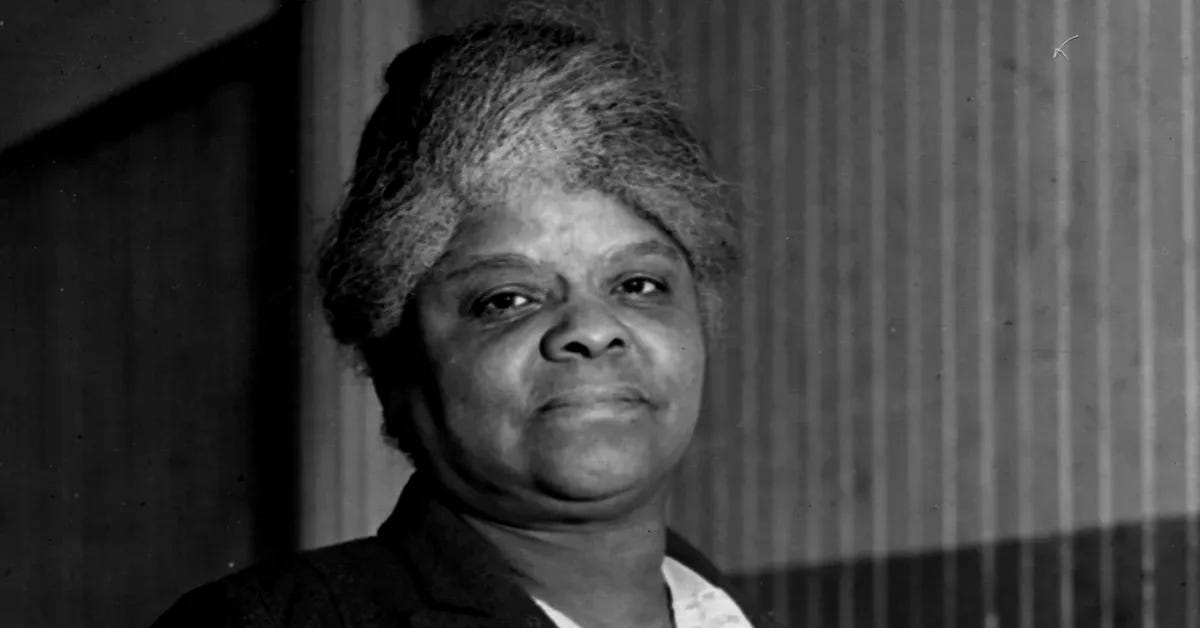
Ida B. Wells wrote,
“The way to right wrongs is to turn the light of truth upon them.”
There was a moment in a meeting when I watched something wrong happen and said nothing.
It was a room full of people I respected, people whose opinions mattered to me. It wasn’t anything dramatic. No one was hurt in a way that left visible marks.
It was a quieter kind of wrong, a decision made for the wrong reasons, dressed in the language of practicality. The truth had been bent just enough to become something else. And everyone in the room let it pass, presumably because everyone in the room understood, without saying it out loud, that naming the wrong would cost something.
I understood that too. So I stayed quiet.
I told myself I was picking my battles. I told myself the moment wasn’t right, that I’d find a better way to address it later. I told myself that calling the thing out in that room would do more harm than good.
I had very reasonable explanations for my silence.
But on the drive home, I kept thinking about what had just been agreed to. What had just been allowed. And I knew, underneath all my reasonable explanations, that what I had actually done was choose comfort over truth. I had let something false stand because the true thing would have been inconvenient.
Ida B. Wells never made that choice. Not once, and she did that in conditions that made my meeting look like a pleasant afternoon.
She turned the light on.
It cost her nearly everything, but she kept turning it on anyway.
The Lamp
Ida B. Wells became an investigative journalist in the 1890s after three of her close friends were lynched in Memphis, Tennessee. They had been murdered by a white mob for the crime of running a successful grocery store that competed with a white-owned business.
She was thirty years old. She had no institutional backing, no legal protection, no guarantee that anyone would listen.
What she had was a press.
And she used it to do something that sounded simple but was in fact radical for its time. She documented what was happening. She traveled to the sites of lynching. She interviewed witnesses. She collected facts. She printed names and dates and the real reasons behind the murders, at a time when the dominant narrative—spread by newspapers, politicians, and even clergy—was that lynching was a necessary response to Black criminality.
Wells turned the light on that lie.
She showed, through meticulous documentation, that most lynching victims had not committed any crime at all. That the real motive behind racial terrorism was economic and political—the suppression of Black progress, and the enforcement of White supremacy. She named this plainly, in print, with evidence.
The response was immediate. Her newspaper office in Memphis was destroyed by a mob while she was out of town. She was warned that if she ever returned to Memphis, she would be killed.
She lost her home, her business, and her community. And she spent the next forty years of her life in exile, continuing the work from Chicago and New York and London, because the truth she had documented needed to keep being said.
Wells did not soften it. She did not wait for a better moment. She did not decide the audience wasn’t ready.
Light doesn’t negotiate with darkness.
It simply reveals what was always there.
The Art of Softening
We have to be honest about why we don’t tell the truth.
It is rarely because we don’t know what the truth is. We almost always know. The problem is that the true thing carries a price tag, and we do a rapid, often unconscious calculation and decide the price is too high.
So we find a version of the truth that costs less.
We dilute it. We qualify it. We wait until the people who would be disturbed by it have left the room. We call this tact. We call it wisdom. We call it not wanting to make things worse.
Wells had a name for it too.
She called it complicity.
Not the dramatic kind. The ordinary kind of complicity that lives in the silence of people who know better and say nothing because the cost of speaking is higher than the cost of letting the false thing stand. The kind of complicity that allows wrongs to persist not because no one sees them, but because everyone who sees them has decided, for very reasonable-sounding reasons, not to say anything about it.
There is a particular version of this that lives in creative and spiritual work too.
The essay that gets softened in ways that understate its own thesis. The sermon that stops just short of the real thing. The newsletter that circles the hard truth without ever quite landing on it. The work that was written to comfort rather than illuminate, because illuminating requires the writer to also be illuminated, to hold the light steady on things they would prefer to look away from.
Wells didn’t have the luxury of looking away.
The thing she was documenting was so pervasive and so lethal that softening it would have made the documentation meaningless. If she had found gentler language for what was being done to Black men and women across the South, she would have been describing a different reality than the one that existed.
The light has to be strong enough to actually show what’s there.
The Sacred Act of Naming
Everything in the prior installments of this series—the inner work, the faith, the discipline, the voice—has been building toward this truth.
The capacity to show up in the world not just as a whole person, but as a witness, is vital. To show up as someone who both sees clearly and says so. As someone whose freedom has grown large enough to be useful to people who are still finding theirs.
Lorde asked you to speak your truth. That was essential.
But Wells asks something more. She asks you to name what is true in the world, not just in your interior life, but in the rooms you sit in, the communities you belong to, the work you do, the systems you move through.
To be someone whose presence makes it harder for false things to stand unchallenged.
This is not about conflict for its own sake. Wells was not interested in confrontation as a personality trait. She was interested in accuracy. In the record. In making sure that what happened was documented clearly enough that the people who came after would know what had actually occurred, not just the comfortable story that those in power preferred.
That discipline—the commitment to witness—is a spiritual practice.
It requires the same kind of faith we’ve been building throughout this series. The faith to trust that the truth, once named, is more useful than the silence that protected everyone from having to deal with it. The faith to believe that the light, even when it reveals something painful, is better than the darkness that lets wrong thing go unnamed.
There will be a cost. Wells paid it. Most truth-tellers do.
The cost is not a sign that you were wrong to speak. It is a sign that what you said mattered enough to threaten something.
Not everything you name will cost you something visible.
Most truth-telling in ordinary life is quieter. It is the conversation you finally have. The piece you finally publish without softening. The meeting where you finally say the thing instead of driving home in silence rehearsing what you should have said.
But even the quiet kind of truth-telling requires the same fundamental decision that Wells made while standing over her destroyed newspaper office in 1892.
You must decide that accuracy matters more than safety.
That the world needs the true account more than it needs your comfort. That freedom, fully inhabited, becomes responsibility—the responsibility to turn the light on and hold it steady, even when darkness pushes back.
You have done inner work. You have found voice. You have started the thing.
Now use all of it for something larger than yourself.
Name what is wrong in the rooms you inhabit. Document what is being allowed to pass unchallenged. Put the true account into language that no one can mistake for something else.
Be the person in the meeting who says the thing. Be the writer who publishes the piece that actually says what the piece was trying to say.
Be the light.
Not because it’s comfortable. Not because the room is ready. Not because the cost is low.
Because Wells was right. The way to right wrongs is to turn the light of truth upon them.
Not to discuss the light.
Not to plan the light.
Not to wait until conditions are favorable for the light.
To finally turn it on.
In solidarity,

P.S. As always, thank you for reading this edition of Freedom Papers. If you found this piece meaningful, share it with a friend. Let our stories of resilience, justice, and love continue to inspire others, as we all work toward a better, more inclusive future. And write. Write, day and night, my friend. We are running out of time.
A great piece. Your Substack is truly one of a kind. Thank you!
"That the world needs the true account more than it needs your comfort. That freedom, fully inhabited, becomes responsibility—the responsibility to turn the light on and hold it steady, even when darkness pushes back."