

Don’t Let It Fester
On Langston Hughes, Deferred Dreams, and the Quiet Urgency of Now

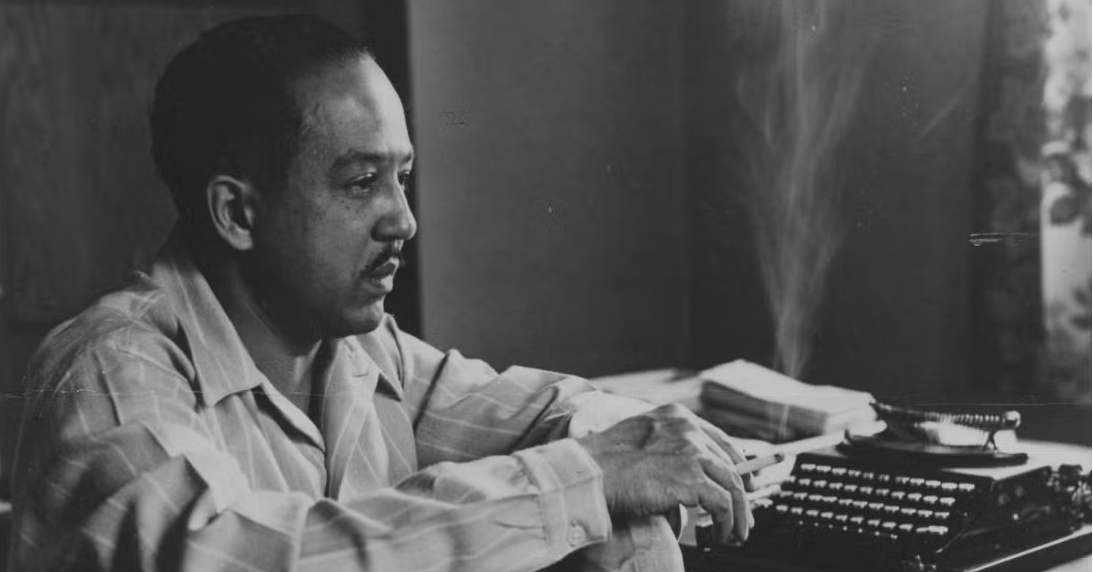
Langston Hughes wrote,
“What happens to dream deferred?”
I found the folder by accident.
I was looking for something else, moving through old files on my laptop, and there it was. A folder I hadn’t opened in almost two years.
Inside were various projects I had forgotten. Several drafts of a book proposal. A half-finished outline for a course I’d meant to propose. Notes on a story idea I had typed quickly on a Tuesday morning because I’d woken up with an idea that felt urgent, that felt like this was the thing, and I didn’t want to lose it before I got too far into the day.
I read through the details of the project and felt an excitement return that I didn’t fully recognize. Feelings of certainty and clarity and momentum surfaced. And then, I sat there in the quiet of my office thinking about what had happened.
Nothing dramatic had happened. Nothing decisive.
The ideas had not been killed. They had not been rejected or stolen or destroyed.
They had simply been deferred.
And deferred again. And then again after that, until the deferral had calcified into something I stopped thinking of as delay and started thinking of as just the way things were.
That’s when Langston Hughes’s poem came back to me. Not as a beautiful work of literature that perfectly fit the moment.
As a kind of diagnosis.
The Dream on Hold
Langston Hughes published “Harlem” in 1951, at the height of a moment when the promises made to Black Americans after World War II were being systematically broken.
The poem is only ten lines. It asks one question, offers five possible answers, and none of them are necessarily good.
Does the dream dry up like a raisin in the sun? Does it fester like a sore? Does it stink like rotten meat? Does it sag like a heavy load? Or does it explode?
Hughes was writing about the Black lived experience. He was writing about the specific horror of being promised something, generation after generation, and watching it get deferred, again and again, by a country that had never fully intended to deliver. He understood the psychology of deferral at a societal scale. What it does to a community to keep reaching for something that keeps not arriving.
But the poem works at a personal scale too. Maybe especially there. Because most of us are not waiting on a country.
We are waiting on ourselves.
The dream we keep deferring is not being held hostage by an external force. It is sitting in a folder on our laptop. It is in the voice memo we recorded three years ago when the idea still felt alive. It is in the conversation we keep meaning to have, the project we keep meaning to start, the version of our life we keep meaning to step into.
And the deferral always sounds reasonable.
The timing isn’t right. The kids are too young. The season is too busy.
I need one more credential, one more year of experience, one more sign that this is really what I’m supposed to do. I’ll start when things settle down. I’ll begin when I feel ready. I’ll do it when I have more time, more money, more clarity, more courage.
Later. Soon. Next month. But always, not yet.
Hughes knew what “not yet” does to a dream over time.
What Deferral Does
Read the poem again slowly.
     Harlem
     By Langston Hughes

     What happens to a dream deferred?

          Does it dry up
          like a raisin in the sun?
          Or fester like a sore—

          And then run?
          Does it stink like rotten meat?
          Or crust and sugar over—
          like a syrupy sweet?

          Maybe it just sags
          like a heavy load.

          Or does it explode?
Notice that Hughes doesn’t ask what happens to a dream that fails. He asks what happens to a dream that is deferred.
Failure is a discrete event. You try, it doesn’t work, you grieve, you move on.
But deferral is something else entirely. Deferral is not an event. It is a condition. A slow transformation that happens without your consent, while you’re busy waiting for conditions to improve.
The raisin dries up.
The sore festers.
The meat rots.
The load gets heavier.
None of these are dramatic events. None of them will announce themselves. You don’t wake up one morning and find your dream destroyed.
You just find it smaller than it once was. More distant. Harder to access.
You find that the voice memo you recorded no longer sounds like your own voice. You find that the folder full of drafts feels like an archive of a person who once had more aliveness than you currently feel.
That’s what deferral does.
It doesn’t kill the dream. It transforms it into grief.
The whole arc of this series has been building toward something. We looked at the mirror and decided to become what we sought. We survived the shaking and let the brittle branches fall. We dropped the veil and decided to show up whole.
We decided to wait with faith and not allow the waiting become hovering. We decided to show up to the garden every day and we unearthed the courage to be seen.
Audre Lorde asked us an essential question. Are we ready to speak? Will we let the inner work find a voice in this world?
Langston Hughes points us toward the next step.
When will we start?
The Only Right Time
Hughes wrote his most urgent work during the Harlem Renaissance and the years that followed. It was a period when an entire generation of Black artists were awakened to the possibility of what they could make together, what they could say, what they could build.
He was surrounded by people who understood that the window was open and that sometimes windows close.
He did not wait until he was certain that his poems were perfect. He did not wait until the audience was ready or the culture was prepared or the institutions were willing to receive him.
He wrote.
He published. He performed in bars and churches and on street corners. He put his work into the world with a kind of urgency that had nothing to do with recklessness and everything to do with understanding that the moment was now and that “later” was a word that ate dreams alive.
There is a version of this series that ends with Lorde’s permission to speak and doesn’t push us any further. But Hughes pushes us further.
Because permission alone is not enough. You can have all the inner freedom in the world—a whole self, a trusting heart, a tended garden, an elevated spirit, a liberated voice—and still find yourself standing at the edge of the work, looking at the open document, and still choosing, not yet.
Not yet is the most seductive form of never.
So, what is the thing you have been deferring?
Not the vague idea of a bigger life. The specific thing. The project. The conversation. The submission. The first chapter, the first episode, the first call, the first morning you wake up and do the work before you check anything else. The thing that was alive in you three years ago when you recorded the voice memo. The thing that’s been in the folder, waiting.
What has it become in the waiting?
Has it dried up a little? Has it gotten heavier? Has it started to smell faintly of the life you’re not living?
Hughes ends his poem with the most chilling possibility of all. Maybe a deferred dream doesn’t dry up or sag or fester.
Maybe it explodes. Dies. Disappears.
I used to read that line as a threat. Now I read it as a warning and a promise at the same time.
The things we suppress don’t disappear. They accumulate pressure. And at some point—in the form of a crisis, a loss, a sudden reckoning in the middle of an ordinary Tuesday, a burst of anger or rage—they demand to be dealt with whether we’re ready or not.
Better to open the folder now. Better to press record now. Better to begin now, and do it badly, imperfectly, with no guarantee of outcome. Do it now, while the dream is still yours to tend rather than a wound you’ll eventually have to explain.
Stop waiting and start.
Not tomorrow.
Not when things settle down.
Not when you’re ready.
Now.
Before the raisin dries any further.
Before the load gets any heavier.
Open the folder.
Press record.
Begin.
The dream has been waiting long enough.
In solidarity,

P.S. As always, thank you for reading this edition of Freedom Papers. If you found this piece meaningful, share it with a friend. Let our stories of resilience, justice, and love continue to inspire others, as we all work toward a better, more inclusive future. And write. Write, day and night, my friend. We are running out of time.
"Not yet is the most seductive form of never." Oh my!
Followed by "a reckoning on an ordinary Tuesday..." Powerful work.
Impressed by the way you turn something as ordinary as an old laptop folder into a moral summons. That image feels so familiar… the forgotten drafts, the half-built ideas, the old version of yourself that once had enough fire to begin or start. You make deferral feel physical here, almost like sediment. It doesn’t arrive as one grand refusal. It hardens by repetition.
I also appreciated the care you took with Hughes. You honored the historical weight of his poem while still letting it press on the private life… the hidden projects, the delayed conversations, the voice memos, the dreams we keep asking to wait in the background. By the time you move toward opening the folder and beginning again, it doesn’t feel motivational in the cheap sense. It feels like someone gently but firmly turning the lights on. Thank you for this. It made me wonder what dreams I’ve been calling deferred when I may actually be asking them to survive neglect.