

Plant the Tree
On Martin Luther King Jr., Generational Faith, and the Courage to Build

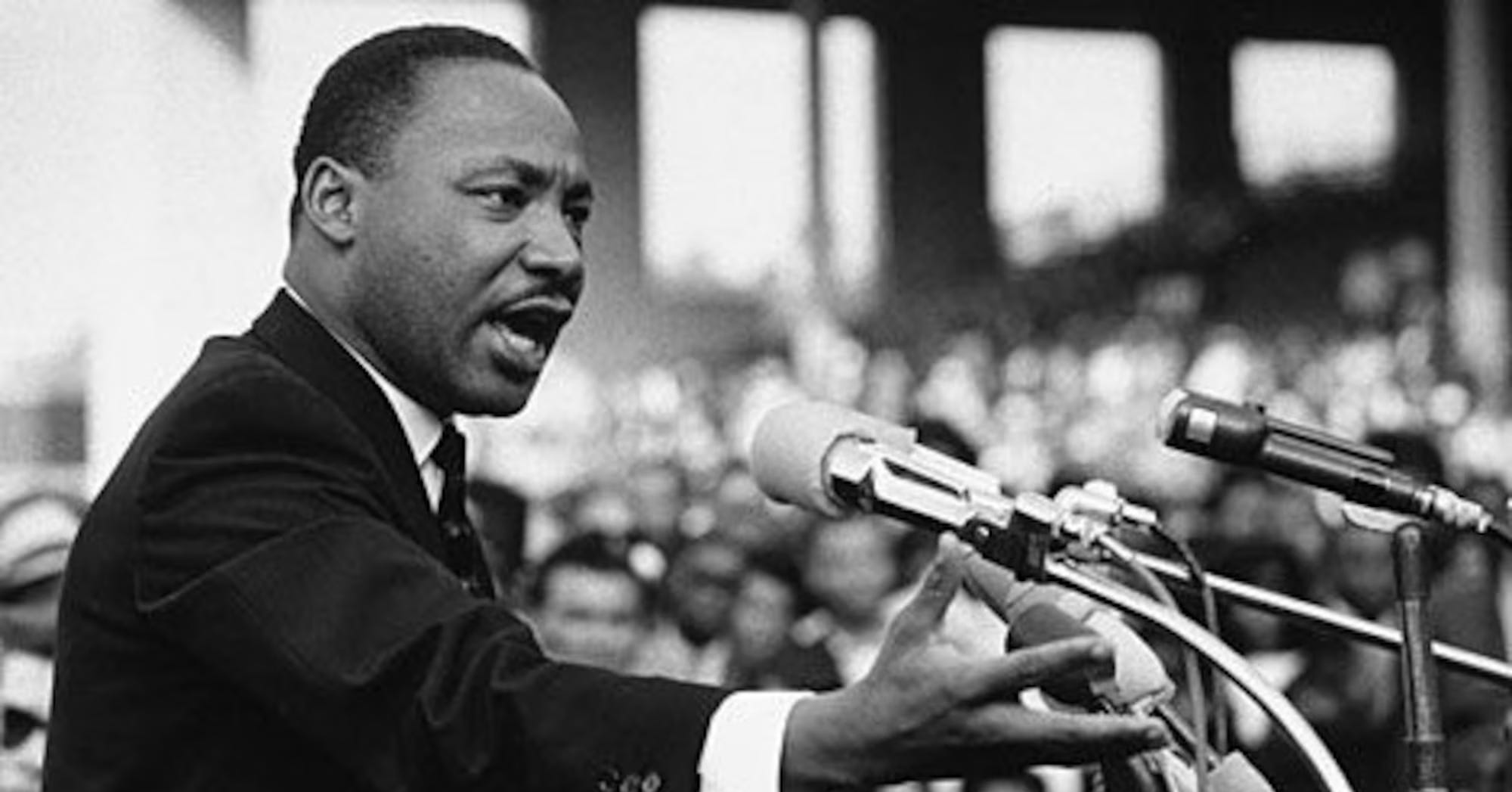
Martin Luther King Jr. wrote,
“Faith is taking the first step even when you don’t see the whole staircase.”
Recently, my oldest son asked me a question that I wasn’t ready for.
He’s eight. We were sitting at the dining room table on an ordinary evening, and he was curious about what I had worked on that day in my office. I had spent some time working on an essay for my newsletter, so I told him I was writing something for people who were trying to become better versions of themselves.
I said, “I want people to know that their work is worth it, even when it is hard to see in the moment.”
He thought about that for a second and then said, with his eight-year-old curiosity:
“But when will you get to find out if it helped them?”
I didn’t answer right away.
Not because I didn’t have an answer. Because the question opened something within me that I had been keeping carefully closed. The truth is that some of what I’m building through my writing—personal essays, poetry, academic scholarship—I may never know if it mattered.
I may plant something and never sit in the shade of its fruit.
I may write words that don’t find their reader until long after I’m gone.
For a long time, I measured my work by what I could see, by the validation I received. By open rates and replies and conversations that came back to me as evidence that something had landed. And those things matter.
But my son’s question reminded me of the much harder question:
Am I willing to do the work even if I never get to see what it became?
The Whole Staircase
Martin Luther King, Jr. delivered his last speech in Memphis, Tennessee, on the evening of April 3, 1968. He was thirty-nine years old. He had been receiving death threats for years.
The FBI had been surveilling him, attempting to blackmail him, working actively to destroy his reputation and the civil rights movement. He was exhausted in the way that people who have been fighting a long war become exhausted.
He stood at the pulpit that night and said something that in my view ranks among the most astonishing acts of faith in American history.
He said he had been to the mountaintop.
He said that he had seen the Promised Land. And then King said:
“I may not get there with you.”
He already knew. He said the quiet part out loud, without performance, without any dramatic resignation that would turn his inner grief into a public spectacle. He simply told the truth. He might not make it. The staircase went further than he could see, and he didn’t know how many steps he had left.
King was killed the next day.
What I believe is most insightful is not his prophecy, but his posture. He was a man who knew he might not reach the destination, who had every reason to despair about the distance still left to travel and the cost already paid, yet who chose in that final speech not to mourn what he wouldn’t see but to celebrate what had been glimpsed from the mountain.
He took the next step anyway. He gave the next speech anyway. He went to Memphis anyway.
That is what faith looks like in practice.
Seeds for Seasons You Won’t See
There are different kinds of faith.
There is the faith of waiting, of trusting the process, of sitting at the table in expectancy rather than anxiety. Anna Julia Cooper waited decades. Howard Thurman practiced stillness. Fannie Lou Hamer sang in the jail cell. Pauli Murray stayed present in the moment.
But the faith that King asks for is different. It is not the faith of a season. It is the faith of a lifetime stretched across generations.
He did not begin the civil rights movement. He also did not finish it. He entered a struggle that had been going on for centuries, added his chapter to the story, and died before the arc had bent as far as he believed it would.
The Voting Rights Act that he helped pass was gutted decades after his death. The dream he articulated from the steps of the Lincoln Memorial is still, in many ways, a dream deferred.
And yet, there are schools that exist because of his work. There are laws that exist because of his work. There are people who ran for office, started organizations, raised children, built communities because of a man they never met who stood at a pulpit and told them that the dream was worth it.
All of that is the harvest of seeds King planted without knowing what the harvest would be or whether he would live to see it.
Anna Julia Cooper understood this too. She wrote and taught and organized for decades in obscurity, and her work was largely ignored in her lifetime. She earned her doctorate at sixty-five, and lived to one hundred and five. She was able to see some of the fruit. But much of what she planted is still blooming now, in people who have never heard her name, but who benefited from the doors she refused to stop knocking on.
Fannie Lou Hamer died at fifty-nine, her body worn from the struggle. Harriet Tubman made her last run on the Underground Railroad and then spent decades advocating for causes she would not see resolved. Ida B. Wells died in 1931 with Jim Crow still firmly in place.
All of these freedom fighters planted trees they did not sit under.
They all chose faithfulness over the need to see immediate results.
Faithful in the Long Now
Part of choosing faithfulness is shifting the way you measure your work.
Not permanently. Not recklessly.
You still need feedback. You still need to know whether what you’re building is connecting with your audience. You still need evidence that you’re on the right path.
I am not asking you to abandon discernment. I am asking you to shift your focus.
Short-term thinking asks:
Is this working now? Are people responding now? Can I see the impact now?
Long-term thinking asks something different:
If I never learn whether this worked, would it still be worth doing? If the book gets published and disappears, would it be worth the years it took to write? If the work I’m doing right now impacts lives in ways I’ll never know about, in ways I’ll never see, decades after I’m gone, is that enough?
King’s answer was yes.
And it had to be. His work would not yield immediate results. He measured progress by alignment with his calling. By whether he was doing what he was put here to do, regardless of what it cost and regardless of whether he’d live to see it completed. The staircase was God’s to build. His job was to take the next step.
That is the invitation here.
Not to stop caring whether your work lands. Not to become indifferent to results.
But to decouple your faithfulness from outcomes.
To understand that the work you are doing right now, whatever it is you are building, will live longer than your life. That the seeds you plant in readers you may never meet will grow in soil you’ll never see.
That the permission you give someone to become more fully themselves through something you write may arrive years from now, in a season you’re not alive to witness.
And that is enough.
Because the alternative—only doing work when you can see immediate results—is not faith. It is transactional. And the work of becoming who you were born to be means building toward something larger than transactional wins.
It is building toward the kind of freedom that doesn’t need an audience to remain faithful.
My son asked me if I’d get to find out who I helped.
I told him the truth. Maybe some of them. But likely not all.
And then I told him the other truth. Not knowing is okay.
That throughout history, leaders have built things they couldn’t fully see.
bell hooks and Octavia Butler and Zora Neale Hurston and W.E.B. Du Bois and Anna Julia Cooper and Howard Thurman and Fannie Lou Hamer and Pauli Murray and James Baldwin and Ralph Ellison and Audre Lorde and Langston Hughes and Ida B. Wells—all of them planted seeds into a future where they could only glimpse the promised land from the mountain top.
You don’t need to see the entire staircase.
You only need to take the next step.
Plant the tree.
Water it faithfully.
Trust the season.
Someone you’ll never meet will one day sit in its shade.
In solidarity,

P.S. As always, thank you for reading this edition of Freedom Papers. If you found this piece meaningful, share it with a friend. Let our stories of resilience, justice, and love continue to inspire others, as we all work toward a better, more inclusive future. And write. Write, day and night, my friend. We are running out of time.